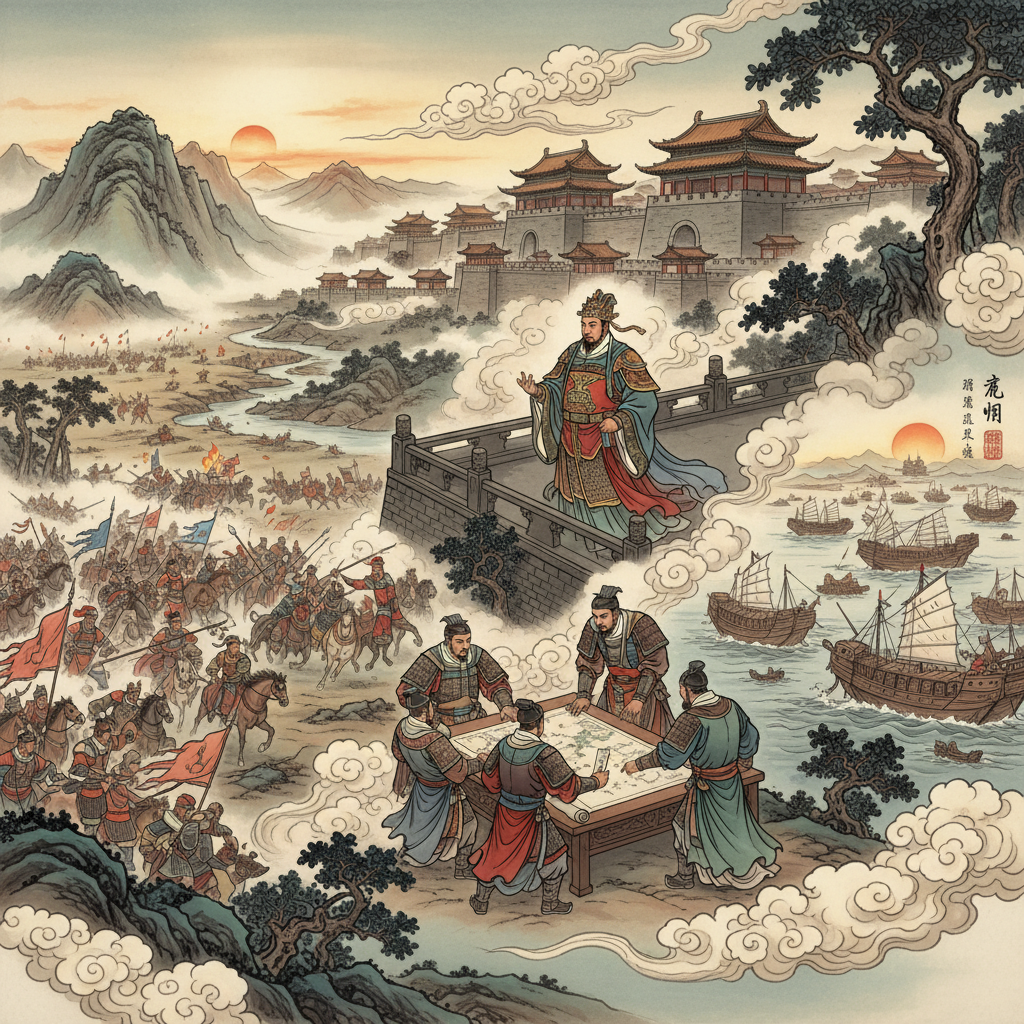
Introduction to Ancient Chinese Military History
Ancient China’s vast and complex history is deeply intertwined with its military developments, which shaped the course of its dynasties, culture, and regional influence. From the warring states period to imperial unifications, military prowess was not only necessary for defense but also for expansion and consolidation of power. Chinese military history reflects a blend of strategic innovation, philosophical thought, and cultural expression, manifesting through famous battles, renowned generals, and the rise and fall of dynasties. This article examines the critical military strategies, key battles, and influential emperors that define ancient Chinese warfare and its enduring legacy.
The Warring States Period: Birthplace of Military Strategy
The Warring States period (475–221 BCE) is often regarded as the golden age of Chinese military thought and strategy. During this era, seven powerful states competed for dominance, leading to constant warfare and fierce political intrigue. It was also the age when Sun Tzu composed The Art of War, a text that remains foundational in both military and business strategy worldwide.
Military technology advanced with the introduction of iron weaponry and crossbows, while large armies became organized under professional generals. Strategic diplomacy and alliances played roles as important as battlefield valor. The consolidation of these tactics ultimately paved the way for the Qin state's unification of China in 221 BCE.
The Qin Dynasty and the Unification Through Force
The Qin Dynasty, though short-lived (221–206 BCE), was pivotal in China’s military history due to King Qin Shi Huang’s successful campaigns to unify the warring states. His emperor title symbolized a new era of centralized authority enforced by military power. The Qin military employed strict discipline, standardized weaponry, and innovative tactics to overpower rivals.
One notable achievement was the use of large-scale conscripted armies supplemented with advanced siege techniques that subdued fortified cities and mountain strongholds. The dynasty’s military also embarked on ambitious construction projects, including the early Great Wall sections, intended to defend against northern nomadic incursions from the Xiongnu.
The Han Dynasty: Military Expansion and Cultural Integration
Following the Qin, the Han Dynasty (206 BCE–220 CE) is renowned for blending military conquest with cultural assimilation, creating a prosperous and stable empire. Its military campaigns expanded China’s borders deep into Central Asia, opening trade routes that would later become part of the Silk Road network.
Han generals such as Huo Qubing and Wei Qing implemented innovative cavalry tactics to combat the mobile Xiongnu tribes, reflecting a shift from infantry-based warfare to more dynamic encounters on China’s frontiers. The Han period also saw improvements in military logistics, supply lines, and communication, enabling sustained campaigns over vast terrain.
Iconic Battles That Defined Dynastic Power
Throughout ancient Chinese history, several battles have been landmarks for military achievement and political transformation. The Battle of Changping (260 BCE) during the Warring States, where the state of Qin decisively defeated Zhao, demonstrated brutal strategy and psychological warfare designed to cripple enemy morale.
Similarly, the Battle of Red Cliffs (208–209 CE) remains one of the most famous naval engagements, where the allied forces of Sun Quan and Liu Bei stopped the southward expansion of Cao Cao’s northern armies. This battle not only prevented northern domination of the south but sowed the seeds for the Three Kingdoms period, immortalized in literature and folklore.
Cultural Impact of Military Traditions in Ancient China
Military practices influenced more than just warfare; they permeated Chinese culture, philosophy, governance, and art. The scholar-warrior ideal merged Confucian ethics with martial valor, emphasizing loyalty, discipline, and righteousness. Martial arts, initially developed for battlefield readiness, also became cultural expressions symbolizing balance between strength and inner harmony.
Moreover, military achievements shaped the legitimacy of emperors and dynasties. A ruler’s mandate from heaven was often justified by victories that preserved peace and order. War memorials, military treatises, and historical chronicles celebrated generals and soldiers alike, ensuring military history remained a vital part of Chinese cultural identity.
Conclusion: The Legacy of Ancient Chinese Military Heritage
Ancient China’s military history is a testament to the ingenuity, endurance, and cultural depth of its people. The strategic lessons, battlefield innovations, and legendary figures emerging from its dynastic wars continue to influence modern military theory and cultural understanding. By studying these conflicts and commanders, one gains a richer appreciation for how military strength shaped the political and cultural landscape of China, laying groundwork for its enduring civilization.
Ancient Chinese warfare is not merely a history of battles and conquests but a sophisticated interplay of strategy, philosophy, and statecraft that resonates across centuries.