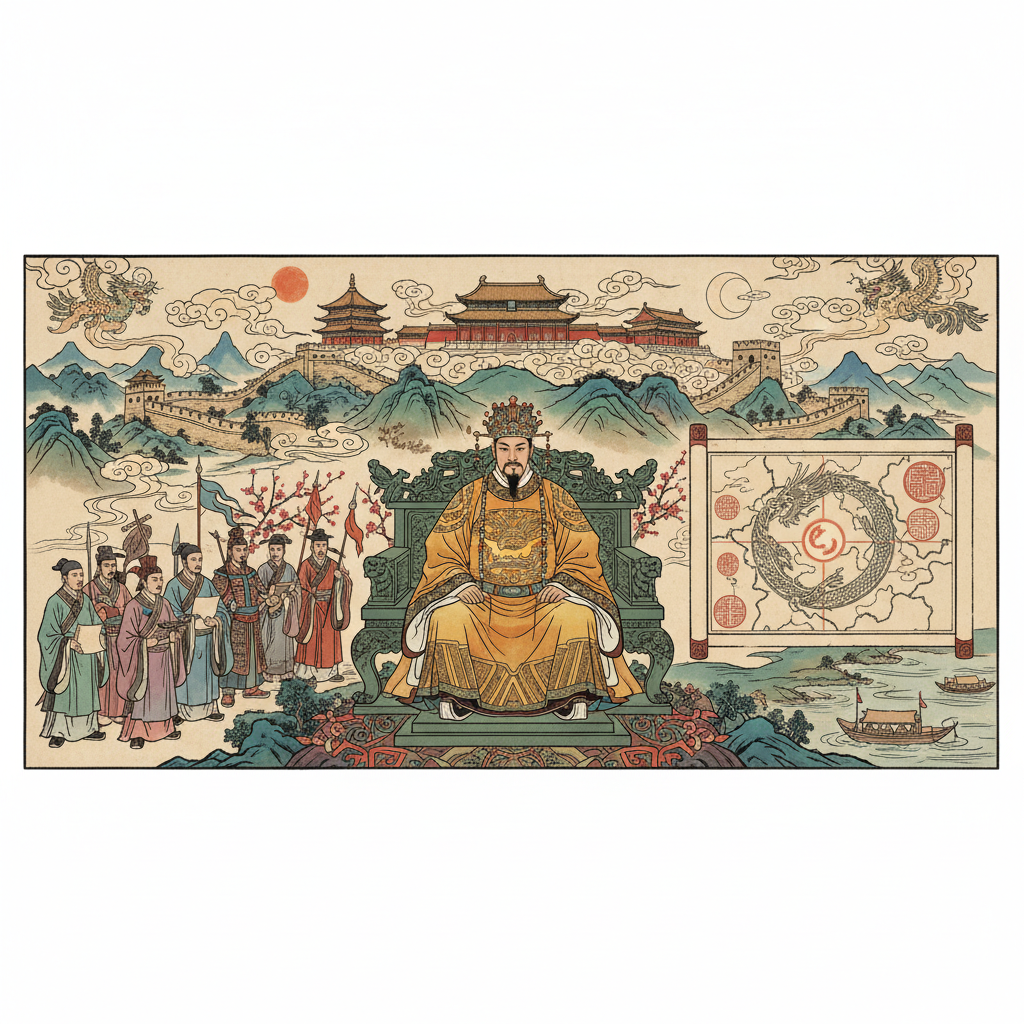
Introduction: The Allure of Ancient Chinese Emperors
Chinese history is marked by a series of powerful dynasties and formidable emperors whose legacies continue to shape the world today. From the mythical Yellow Emperor to the controversial rule of Empress Wu Zetian, the narrative of these rulers is intertwined with the cultural, political, and military developments of ancient China. This article explores the pivotal role of emperors throughout Chinese dynasties, examining their influences on culture, governance, and society.
The Dynastic Cycle: Understanding Imperial Rule in Ancient China
One of the most essential aspects of Chinese history is the dynastic cycle, a political theory that explains the rise and fall of dynasties. Each new dynasty claimed legitimacy through the "Mandate of Heaven," a divine right to rule. This belief established that the emperor's authority was granted by heaven, and, in turn, the emperor had to govern justly to maintain the Mandate.
The cyclical nature of dynasties serves as a testament to the impermanence of power in ancient China. Dynasties like the Shang and Zhou established foundational political structures, while later dynasties like the Tang and Ming further refined these systems. The rulers during these epochs left profound cultural marks, evident in literature, art, and governance that resonate to this day.
Notable Emperors and Their Contributions
Qin Shi Huang: The First Emperor
Qin Shi Huang, the first emperor of a unified China, is a formidable figure in history. His reign, beginning in 221 BCE, marked the end of the Warring States period and initiated the Qin Dynasty. He is renowned for major accomplishments such as the standardization of measurements, currency, and even writing, which facilitated trade and communication across vast regions.
However, Qin Shi Huang’s legacy is controversial. His oppressive tactics, including heavy taxation and forced labor, sparked public discontent that led to the dynasty's quick demise. Despite this, his monumental achievements, like the construction of the Great Wall, are celebrated as enduring symbols of Chinese civilization.
Empress Wu Zetian: The Only Female Emperor
Wu Zetian, the only officially recognized female emperor in Chinese history, ruled during the Tang Dynasty in the 7th century. Rising to power through political maneuvering and her intelligence, Wu Zetian implemented significant reforms, including the promotion of meritocracy in government appointments. This encouraged the intellectual growth of society by valuing talent over nobility.
Her reign saw cultural flourishing, particularly in Buddhism, which she supported extensively. Despite facing criticism and paranoia, her governance helped solidify the Tang Dynasty as a cultural high point in Chinese history.
Kublai Khan: The Yuan Dynasty and Cultural Exchange
Kublai Khan, the founder of the Yuan Dynasty, was pivotal in promoting cultural exchange between East and West. His successful conquests expanded the Mongol Empire, allowing for unprecedented interaction with foreign cultures, notably through the famed journeys of Marco Polo. Khan's reign (1260–1294) facilitated the flourishing of arts and sciences, leading to a distinctive era of creativity, blending Mongolian and Chinese influences.
Kublai Khan's efforts to promote stability and trade had far-reaching impacts, setting the stage for future dynasties to build upon a foundation of economic prosperity and cultural richness.
The Role of Battles in Shaping Dynastic Power
Battles were crucial in determining the ascendancy and longevity of dynasties and their emperors. The unification of China under Qin Shi Huang was completed through relentless military campaigns that subdued rival states. Similarly, the Tang and Song Dynasties faced numerous rebellions and invasions that tested their strength.
The famous Battle of Red Cliffs (208 CE) during the Three Kingdoms period exemplifies how pivotal battles could alter the course of Chinese history. The innovative strategies employed in this battle by leaders like Zhou Yu carved out political boundaries that would define regional powers for centuries.
Cultural Significance of the Emperors
The emperors' legacies extend beyond political achievements; they significantly shaped the culture of China. From the promotion of Confucian ideals to the encouragement of artistic endeavors, emperors played a central role in fostering a rich cultural heritage. The construction of grand palaces, temples, and gardens reflects the cultural values of the time, celebrating nature, spirituality, and imperial grandeur.
Emperors often commissioned historians to document their reigns, preserving their histories and philosophies for generations. The art of poetry flourished under several dynasties, revealing insights into the human experience and the natural world, and influencing literary traditions in China and beyond.
Conclusion: The Enduring Influence of Chinese Emperors
The legacy of Chinese emperors is a tapestry of power, culture, and history. Their reigns encapsulated a broad spectrum of governing styles, societal changes, and cultural advancements that have left an indelible mark on China. Understanding the roles these rulers played provides not just insight into ancient governance but also an appreciation for the profound depth of Chinese civilization.
As we continue to explore their histories, the influence of these emperors remains relevant, reminding us of the complexities of leadership and the intertwined fabric of culture and power in shaping societal trajectories.