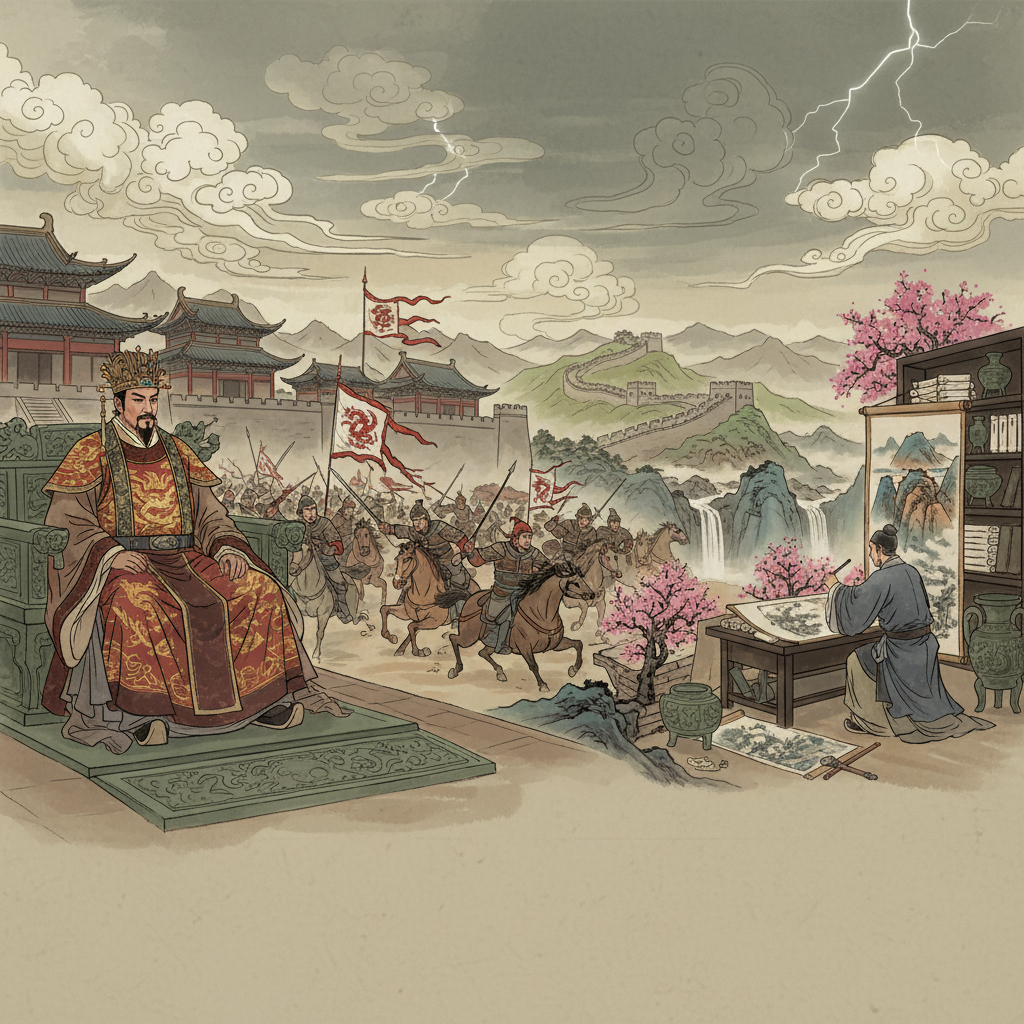
Introduction to Ancient Chinese Dynasties
Ancient China is a tapestry woven from millennia of influential dynasties, visionary emperors, transformative battles, and profound cultural achievements. Spanning from legendary origins around 2100 BCE to the fall of imperial rule in the early 20th century, Chinese dynasties shaped not only East Asia but also global history. Understanding these eras provides insight into political power shifts, social developments, and artistic legacies that continue to inspire.
The Rise and Fall of Early Dynasties: Xia, Shang, and Zhou
China’s earliest dynasties laid the foundation of its civilization. The Xia Dynasty (c. 2070–1600 BCE), often considered semi-legendary, is credited with establishing hereditary rule and early irrigation techniques. Following Xia, the Shang Dynasty (c. 1600–1046 BCE) marked the first verifiable dynasty with bronze casting, oracle bone script, and complex religious rituals.
The Zhou Dynasty (1046–256 BCE) succeeded Shang and introduced the Mandate of Heaven concept—a divine right to rule that underpinned imperial legitimacy for centuries. This period saw philosophical flourishing with Confucianism and Daoism emerging, influencing Chinese thought profoundly. The Zhou era ended amid internal strife and fragmentation, famously leading to the Warring States period, a brutal epoch of military conflict and political intrigue.
Imperial Unification: The Qin Dynasty and the First Emperor
The Qin Dynasty (221–206 BCE), though short-lived, was pivotal. Qin Shi Huang, China’s first emperor, unified the warring states, standardizing currency, measurements, scripts, and laws. His reign also initiated grand projects like parts of the Great Wall and a massive mausoleum guarded by the Terracotta Army—icons of Chinese imperial power and artistry.
Despite Qin’s authoritarianism and harsh laws sparking rebellion, its establishment of centralized bureaucracy shaped later dynasties. The Qin legacy exemplifies the balance between unification and authoritarian control in Chinese governance models.
The Han Dynasty: Golden Era of Cultural Prosperity and Expansion
Following Qin’s collapse, the Han Dynasty (206 BCE–220 CE) ushered in China’s classical imperial age. The Han rulers enhanced Confucianism as state ideology, stabilizing society and administration for over four centuries. This dynasty expanded agriculture, trade, and technology, notably advancing papermaking and metallurgy.
The Han also propelled the Silk Road’s development, linking China with Central Asia and Europe, facilitating cultural and commercial exchanges. Their military campaigns secured borders and suppressed rebellions, cementing Han dominance. The dynasty’s legacy includes shaping Chinese identity, political structure, and cultural pride—often celebrated as a "golden age."
Dynamic Dynasties: Tang and Song Cultural Flourishing
The Tang Dynasty (618–907 CE) is renowned for cosmopolitanism, artistic excellence, and religious diversity. Its capital, Chang’an, was a bustling metropolis attracting traders, scholars, and monks from across Asia. Poetry, painting, and music thrived; figures like Li Bai left enduring marks on global culture. The Tang also promoted Buddhism, intertwining spiritual and imperial power.
The succeeding Song Dynasty (960–1279 CE) emphasized technological innovation, urbanization, and a thriving market economy. Printing technology advanced literature and education, while Neo-Confucianism emerged as a dominant philosophical current. The Song excelled in ceramics, landscape painting, and scientific inquiry, setting cultural standards revered by later generations.
Emperors and Epic Battles: Shaping the Chinese Empire
Throughout ancient Chinese history, charismatic emperors and epic battles defined political landscapes. From Qin Shi Huang’s ruthless conquests to Han generals defending frontiers, military prowess underpinned shifts in power. The Battle of Gaixia (202 BCE), which ended the Chu-Han Contention, established Han supremacy. Later, the An Lushan Rebellion (755 CE) during the Tang weakened imperial control, highlighting vulnerabilities behind cultural splendor.
Emperors often balanced warfare with patronage of arts, governance reforms, and monumental construction—crafting legacies beyond mere conquest. Many dynasties employed vast armies but relied equally on diplomacy and meritocratic civil service examinations to maintain stability.
Enduring Cultural Significance of Ancient Chinese Dynasties
Ancient Chinese dynasties collectively contributed to one of the world’s oldest continuous civilizations. Their innovations in governance, philosophy, technology, and arts influenced neighboring regions and global history. Concepts like the Mandate of Heaven, Confucian ethics, and imperial bureaucracy remain studied and respected worldwide.
Moreover, traditional music, poetry, painting styles, and religious traditions trace their roots to these dynastic periods. The balance between centralized authority and cultural flourishing set precedents for governance and societal development. Ancient China’s dynastic saga offers timeless lessons on power, culture, and human resilience.
Conclusion
Exploring ancient Chinese dynasties reveals a civilization rich in complexity and achievement. From early rulers to cultural golden ages, these eras encapsulate stories of ambition, innovation, and artistry. Understanding China’s dynastic past enriches appreciation for its global heritage and ongoing cultural influence. For historians, travelers, and cultural enthusiasts alike, the vast tapestry of ancient China remains a treasure trove of discovery.