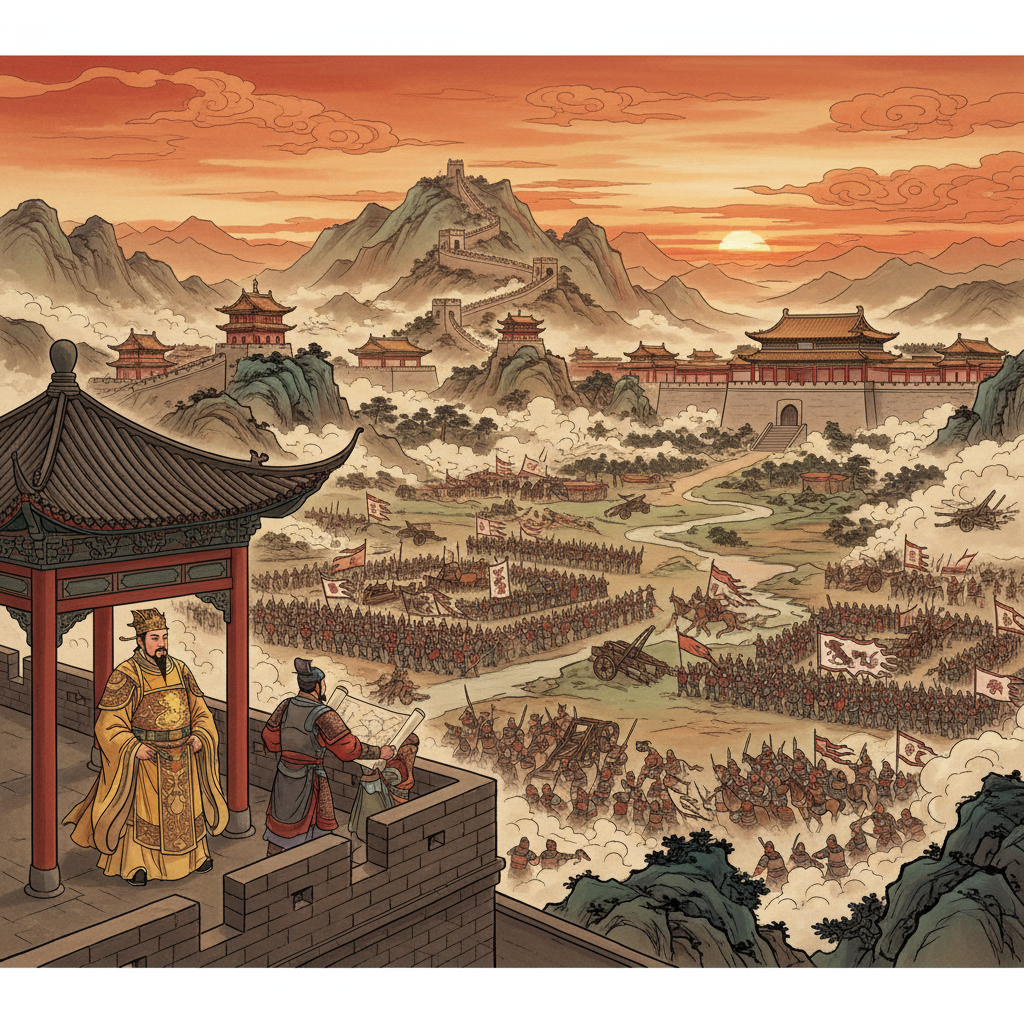
The Foundations of Warfare in Ancient China
Ancient China, a civilization with a history spanning over 5,000 years, is renowned for its intricate cultural tapestry and formidable military strategies. The era's battles, shaped by complex socio-political contexts, played a crucial role in the formation of dynasties and the consolidation of power among emperors. From the Xia dynasty (c. 2070–1600 BC) to the Qing dynasty (1644–1912 AD), the military engagements not only involved grand armies but also wielded lasting cultural significance.
The Warring States Period: An Era of Fragmentation and Strategy
One of the key periods in the history of Chinese warfare is the Warring States Period (475–221 BC). This epoch was marked by the fragmentation of the Zhou dynasty’s feudal system into numerous competing states. It was during this time that military strategies evolved dramatically. The introduction of iron weapons, chariots, and, notably, infantry formations transformed the battlefield landscape.
The Battle of Changping (260 BC) stands out during this tumultuous period. Fought between the states of Qin and Zhao, this battle exemplified the era's brutal competitiveness, leading to a staggering death toll of over 400,000 soldiers. Despite the unimaginable loss of life, the victory solidified Qin's dominance and paved the way for the eventual unification of China under Qin Shi Huang. This period of intense conflict also inspired military philosophies, notably those of Sun Tzu, whose work "The Art of War" remains influential to this day.
The Han Dynasty: Warfare and Cultural Trademarks
Following the Qin dynasty, the Han dynasty (206 BC–220 AD) further refined military tactics, focusing on both defense and expansion. The Han emperors engaged in numerous battles that not only solidified their rule but also facilitated trade and cultural exchange along the Silk Road.
The Battle of Zhuolu (c. 200 BC) against the northern Xiongnu tribes is particularly noteworthy. This conflict was emblematic of the Han's military strategy, which combined infantry assaults with cavalry maneuvers. The victory established a lasting buffer against northern invasions, allowing the Han to maintain peace and prosperity. Culturally, the Han dynasty's military campaigns ushered in a rich era of art, science, and literature. The famous silk brocade emerged from this period, representing both the wealth gained from successful military endeavors and the intricate craftsmanship of Chinese artisans.
Conflicts During the Three Kingdoms: Heroes and Legends
The Three Kingdoms period (220–280 AD) is often romanticized in Chinese culture, particularly due to its notable battles and legendary figures. The stories of Liu Bei, Cao Cao, and Sun Quan have become ingrained in Chinese folklore, primarily due to the historical novel "Romance of the Three Kingdoms."
One of the pivotal battles during this era was the Battle of Red Cliffs (208 AD), fought between the forces of Cao Cao and the alliance of Sun Quan and Liu Bei. This battle is not only significant for its military tactics, marked by the strategic use of fire ships, but it also represented the classic theme of unity against a common enemy—a recurrent motif in Chinese history. Following the victory at Red Cliffs, the Southern warlords expanded their territories, fostering unique regional cultures that continue to influence local customs today.
The Mongol Invasions and the Yuan Dynasty: Cultural Exchange through Conflict
The Mongol invasions during the 13th century led to the establishment of the Yuan dynasty (1271–1368 AD) under Kublai Khan. While these invasions were marked by significant destruction and loss of life, they also facilitated remarkable cultural exchanges between the East and West.
Several key battles, such as the Siege of Xiangyang (1268–1273 AD), exemplified the ferocity of the Mongol military tactics and their eventual triumph over the Song dynasty. The Mongol military introduced new technologies, including siege warfare tactics that would shape future Chinese military strategy. Culturally, the Yuan dynasty heralded the inclusion of diverse cultural practices, leading to the flourishing of art forms like Peking opera and the expansion of trade along the Silk Road.
Conclusion: The Cultural Legacy of Ancient Chinese Battles
The battles fought throughout ancient Chinese history are not just chronicles of warfare; they represent a confluence of strategy, culture, and the human spirit. Each conflict has shaped not only the political landscape but also the rich tapestry of Chinese culture, influencing literature, philosophy, and social dynamics.
From the strategic brilliance during the Warring States Period to the legends born from the battles of the Three Kingdoms and the cultural exchanges that followed the Mongol invasions, the legacy left by these battles continues to resonate in modern-day China. Understanding these historical conflicts is essential for appreciating the current culture and societal values borne from a rich legacy of resilience and ingenuity.