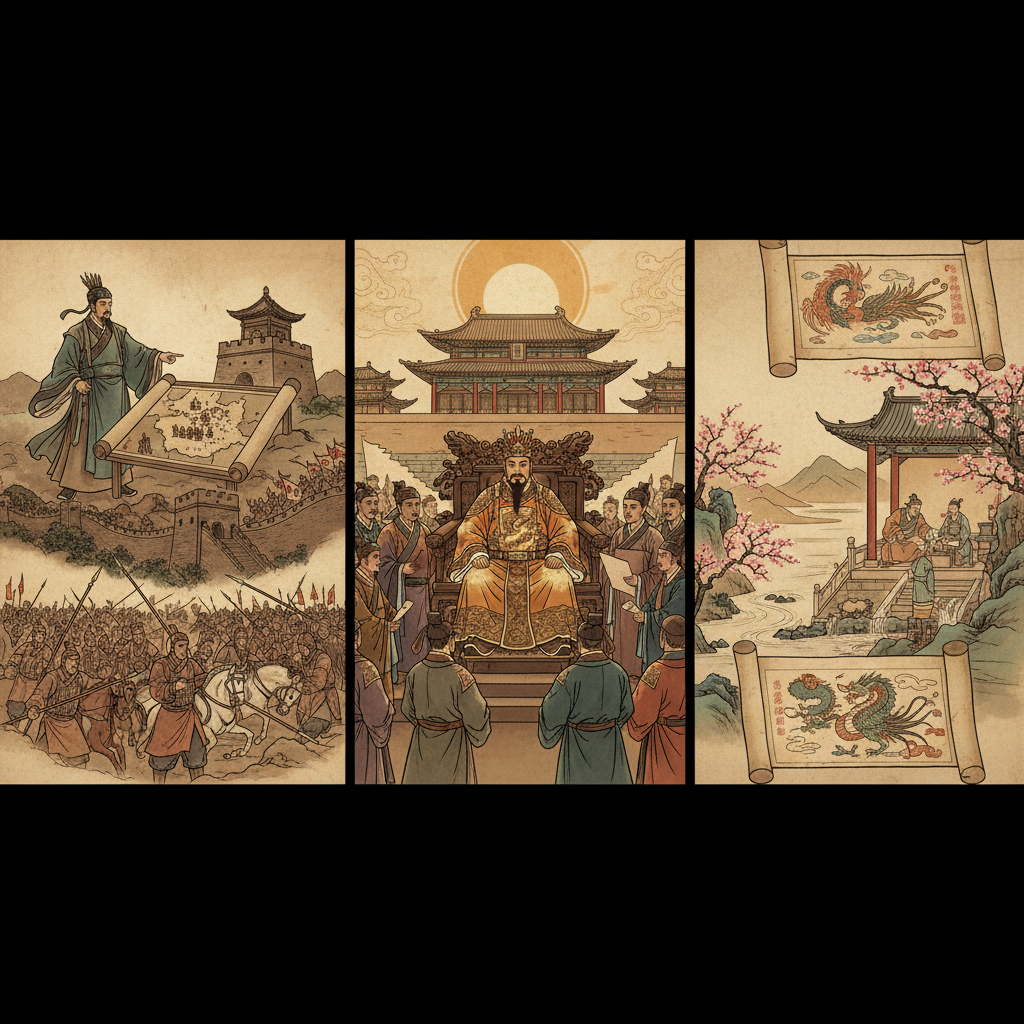
The Martial Spirit of Ancient China: A Historical Overview
Ancient China boasts a rich tapestry of history marked by numerous dynasties and an indomitable martial spirit. Spanning thousands of years, the narrative of Chinese ancient history is punctuated with epic battles that not only determined the fates of emperors and dynasties but also left a lasting imprint on Chinese culture and society. These confrontations were often rooted in the aspirations of powerful leaders, territorial disputes, and the quest for supremacy. Understanding this historical context is essential to appreciate the profound impact of warfare on the evolution of Chinese civilization.
The Warring States Period: Birth of Strategic Warfare
One of the most pivotal eras in ancient Chinese warfare is the Warring States Period (475-221 BC), characterized by intense competition among regional states vying for dominance. The era not only witnessed the introduction of sophisticated military strategies but also the rise of iconic figures, including Sun Tzu, whose treatise "The Art of War" remains influential in military theory to this day. During this period, battles such as the Battle of Changping (260 BC) illustrated the devastating consequences of warfare, where an estimated 400,000 soldiers perished, highlighting the tactical cunning and brutal nature of warfare.
The Warring States Period revolutionized military organization and strategy. States invested heavily in their armies, leading to tactical innovations such as the use of cavalry and the implementation of decisive battlefield formations. These developments paved the way for a lasting military tradition that would influence not only China's future but also military strategies around the world.
The Qin Dynasty's Conquests: Unifying a Nation
Following the Warring States Period, the Qin Dynasty (221-206 BC), under the leadership of Qin Shi Huang, emerged victorious and unified China for the first time. The dynasty's emphasis on consolidation and centralization was coupled with military might, leading to numerous battles against the remaining independent states. The Battle of Julu (207 BC) is a significant example, where Qin forces faced an alliance of states in a decisive clash. Although Qin eventually triumphed, it exemplified the extensive battle tactics and the importance of psychological warfare through propaganda and troop morale.
Under the Qin Dynasty, warfare became a tool of governance, where victories not only expanded the empire’s borders but also solidified the emperor's divine status and absolute rule. The military innovations of this era, including logistics and fortifications, would become integral to subsequent dynasties.
The Han Dynasty: Military Exploits and Cultural Flourishing
With the Qin Dynasty’s fall, the Han Dynasty (206 BC-220 AD) ascended, blending militarism with a flourishing of culture and philosophy. The Han engaged in notable conflicts, including the campaigns against the Xiongnu nomadic tribes, which stretched the boundaries of the empire. The famous Battle of Mobei (119 BC) reflected the Han's strategic prowess, showcasing the utilization of cavalry and psychological warfare to outmaneuver opponents.
Art and literature evolved during the Han, with military exploits serving as popular subjects. The inscriptions on stone tablets commemorating victories and the historical writings of Sima Qian in the "Records of the Grand Historian" fused warfare with cultural identity, underscoring the idea that military success was intrinsically tied to cultural triumph.
The Tang Dynasty: An Era of Expansion and Innovation
As the Tang Dynasty (618-907 AD) rose to prominence, it became a golden age of military innovation and cultural exchange. The dynasty’s military campaigns extended China's influence into Central Asia, fostering the Silk Road's expansion, which enabled cultural interactions. Noteworthy battles, such as the Battle of Talas (751 AD), where Tang forces clashed with an Arab army, showcased the diversity of combat tactics and the implications of cross-cultural encounters.
Moreover, the Tang Dynasty embraced a unique belief in the 'Civilization through Military Might’ philosophy, promoting the idea that a strong military was essential to ensuring peace and stability. This approach instantiated a dual legacy of martial strength and cultural richness, as arts and technology flourished alongside military conquests.
Conclusion: The Lasting Legacy of Ancient Chinese Battles
The epic battles of ancient China did not merely serve as military confrontations; they shaped the course of a civilization and defined cultural identities. From the strategic intricacies of the Warring States Period to the unifying conquests of the Qin and the expansive ambitions of the Tang, these conflicts illustrate how warfare influenced governance, cultural expression, and societal values. The historical lessons gleaned from these ancient battles continue to resonate in modern strategic studies and the collective memory of China, reminding us of the key role that military history plays in the cultural legacy of nations.