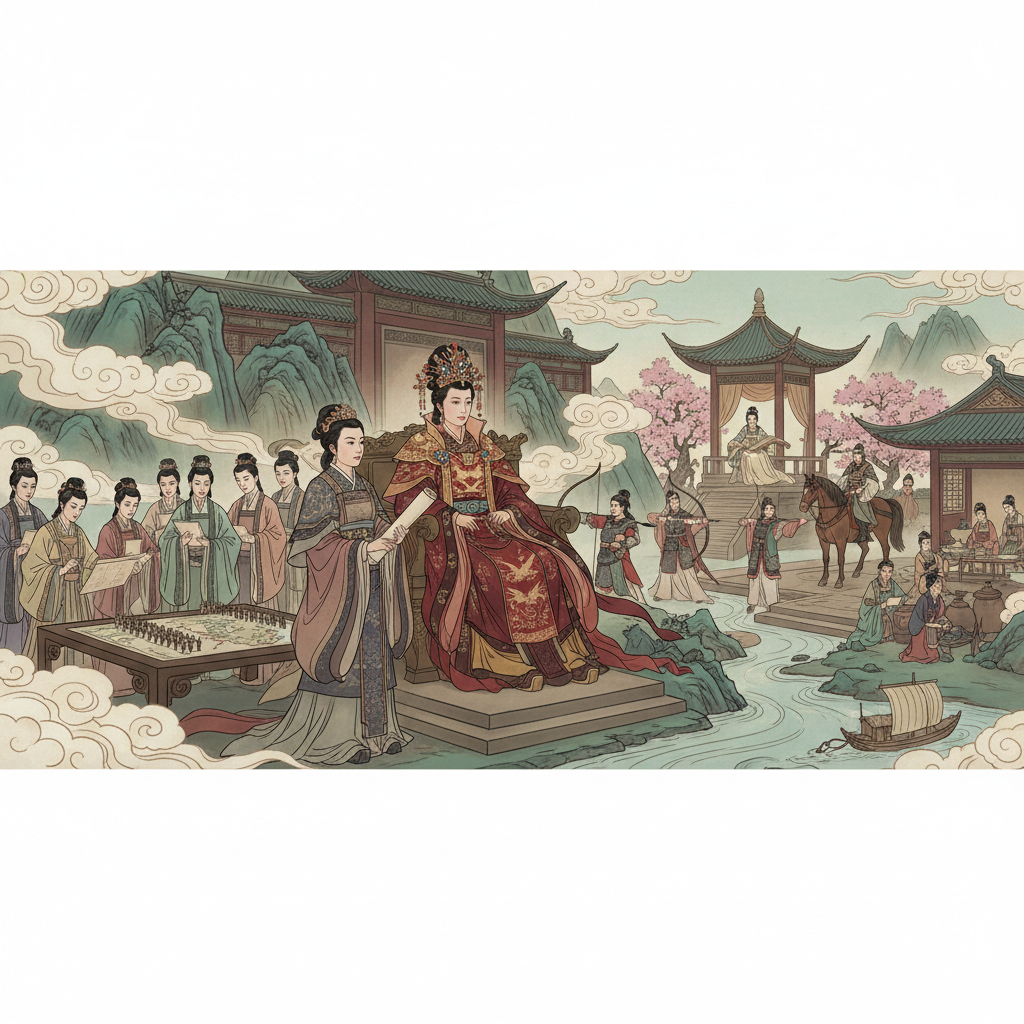
Introduction: The Hidden Figures of Ancient China
China's ancient dynasties span thousands of years, marked by significant cultural, political, and social developments. While much focus is given to male figures—empires built by emperors and warriors—the contributions and roles of women in these dynasties are often overlooked. From the infamous empresses who wielded power behind the throne to ordinary women whose domestic skills shaped society, women's narratives are integral to China's rich historical tapestry.
The Early Dynasties: From Matriarchs to Femininity
In China's early dynasties, particularly during the Xia and Shang periods (c. 2070–1046 BCE), women's roles varied significantly. In some instances, women held considerable influence in family and spiritual realms. An example is the goddess Nuwa, often considered a creator figure whose importance in mythology illustrates the reverence for femininity in early Chinese culture.
During the Shang dynasty, archaeological findings of oracle bones suggest that women actively participated in the spiritual and religious practices, often serving as priestesses. However, as the Zhou dynasty emerged (c. 1046–256 BCE), Confucian ideals began framing women primarily in matrimonial contexts, emphasizing their roles as daughters, wives, and mothers—values entrenched in the family hierarchy. Yet, noteworthy figures like Ban Zhao emerged, a prominent female historian and scholar known for her work "Lessons for Women," advocating for women’s education and moral integrity, setting the stage for future generations of women in China.
The Han Dynasty: Blossoming Influence and Power
The Han dynasty (206 BCE–220 CE) marked a striking period for women as opportunities for social mobility widened. Prominent empresses, such as Empress Lü Zhi, wielded substantial political influence, often leveraging their position to secure power for their families and maintain stability within the court.
Culturally, the Han dynasty promoted women's contributions in domestic spheres through the revelation of silk weaving techniques and textile production, which became a staple of trade and economy. Women began participating in the art of literature and poetry. The era witnessed the rise of female poets whose works reflected personal experiences and social issues, thus, giving voice to women's perspectives rarely heard before. This cultural flourishing extended to the realm of philosophy, where women started influencing emerging schools of thought, challenging the notion that learning was solely a male domain.
The Tang Dynasty: A Golden Age for Women
The Tang dynasty (618–907 CE) is commonly hailed as a zenith of Chinese cultural history, and women's roles during this period reflect an unprecedented level of empowerment. Unlike previous dynasties, women enjoyed more freedom, engaging in poetry, music, and social gatherings.
Famous female poets like Li Qingzhao and Xu Zhenzhen emerged, whose literary works are still celebrated today for their emotional depth and artistic quality. The Tang era also marked the inception of historical narratives like "The Memoirs of the Two Lin" and depicted powerful women in military roles, challenging societal norms.
However, women's increased status did not come without challenges, such as the pervasive patriarchal structures that began to reassert themselves towards the late Tang dynasty. As imperial power waned, and the feudal system became more rigid, women's roles began depicting a more restricted existence focused primarily on domestic responsibilities.
The Song Dynasty: Resilience Amidst Change
The Song dynasty (960–1279 CE) witnessed a reevaluation of women's roles amidst significant social and economic changes. Despite the resurgence of Confucian norms, which emphasized female obedience and subservience, women found ways to exert agency.
While the ideal of the "Three Obediences" dictated women's lives, craftswomen emerged in urban centers, contributing to the prosperous silk industry and ceramics trade. Women like Zhang Yujin became renowned for their artistry, embodying the resilience of their sex in an era that often marginalized their contributions. Additionally, women's roles in administrative tasks gained acknowledgment during this period, a testament to their versatility.
Conclusion: A Legacy of Strength and Resilience
The narrative of women throughout ancient Chinese history is one of resilience amid fluctuating societal norms. Despite the constraints posed by Confucian principles and patriarchal structures, women of various dynasties left indelible marks on China's cultural heritage. Their stories—often interwoven with the fabric of political power, artistic expression, and domestic life—remind us that the history of China is not complete without acknowledging the profound influence of women. Understanding their roles provides deeper insights into China's cultural evolution and the ongoing dialogue about women's rights and representation in contemporary society.
The legacy of women in ancient China continues to resonate, inspiring new generations to assess their roles in shaping history and culture. As we unearth their stories, we forge a more inclusive narrative of the past that acknowledges the invaluable contributions of women across time and space.