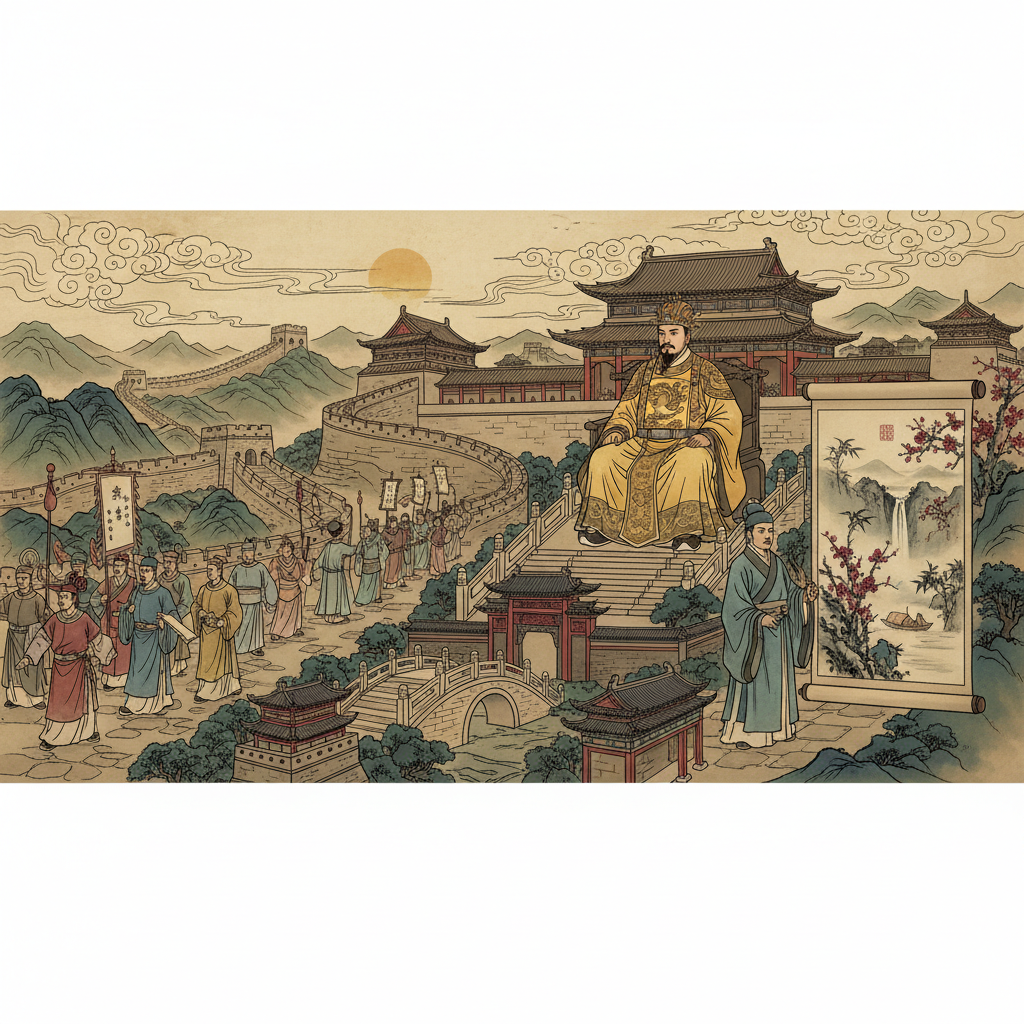
A Journey Through Ancient China: Dynasties, Emperors, and Cultural Heritage
Ancient China boasts a historical legacy that stretches back thousands of years, intertwining influential dynasties, powerful emperors, epic battles, and vibrant cultural traditions. From the foundations of the earliest civilizations to the complex societal structures of the dynastic periods, understanding ancient Chinese history provides profound insights into the modern world. This article explores the key dynasties, their notable emperors, critical battles, and the cultural markers that shaped one of the world's oldest continuous civilizations.
The Rise and Fall of Dynasties: A Historical Overview
China's illustrious history is marked by a succession of dynasties that played crucial roles in its development and expansion. The Xia Dynasty (c. 2070–1600 BCE) is often regarded as the first, though there are debates about its historical authenticity. It was succeeded by the Shang Dynasty (c. 1600–1046 BCE), renowned for its advances in bronze casting and the establishment of writing systems.
The Zhou Dynasty (c. 1046–256 BCE) introduced feudalism and made significant philosophical contributions, birthing Confucianism and Daoism. Following the Zhou, the Qin Dynasty (221–206 BCE) unified China and initiated the construction of the Great Wall alongside many centralizing reforms under Emperor Qin Shi Huang. These foundational periods laid the groundwork for future dynasties, leading to eras of prosperity and turmoil.
Notable Emperors: Leaders Who Shaped Legacy
Throughout the vast timeline of Chinese history, several emperors left indelible marks on the nation. Emperor Wu of Han (141–87 BCE) is celebrated for expanding the empire's territories and solidifying the Silk Road trade routes. His reign saw cultural exchanges that left lasting impacts on both China and its neighboring regions.
Another significant figure is Emperor Taizong of Tang (626–649 CE), known for consolidating power and fueling a cultural renaissance during the Tang Dynasty. His era witnessed advancements in art, literature, and governance, making it one of the most culturally rich periods in Chinese history.
Kublai Khan, a descendant of Genghis Khan who became the first Yuan Dynasty emperor, also deserves mention. His rule marked the Mongol influence over China and the eventual amalgamation of different cultures within the empire, leading to a unique blend of traditions.
Epic Battles: Conflict and Conquest
The history of ancient China is woven with epic battles that shaped dynasties and altered the course of its civilization. One of the most famous is the Battle of Red Cliffs (208–209 CE), a pivotal conflict during the waning days of the Han Dynasty. The strategic victory by the allied forces of Sun Quan and Liu Bei against the numerically superior forces of Cao Cao halted the latter's expansion and facilitated the emergence of the Three Kingdoms era.
Another significant battle is the Battle of Muye (1046 BCE), where King Wu of Zhou defeated the last Shang emperor, thus ending the Shang Dynasty and establishing the Zhou Dynasty's supremacy. These battles not only determined political power but also influenced military strategies and governance practices in later periods.
Cultural Significance: Arts, Philosophy, and Innovations
The cultural contributions of ancient China are vast and varied, encompassing fields such as art, literature, philosophy, and technology. Ancient Chinese philosophy, dominated by the teachings of Confucius and Laozi, laid the ethical and moral foundations for Chinese society. Confucian ideals emphasized harmony, respect, and filial piety, shaping social interactions for centuries.
In the realm of arts, poetry flourished during the Tang Dynasty, leading to some of the most revered poets, such as Li Bai and Du Fu, whose works are still celebrated today. Calligraphy and painting also saw remarkable developments during this time, exemplifying the intricate relationship between art and literature in Chinese culture.
Furthermore, ancient China was home to remarkable technological innovations, including papermaking, the compass, and printing techniques that later spread across the globe, influencing civilizations far beyond its borders.
Conclusion: Legacy of Ancient China
The rich tapestry of ancient Chinese history reflects not only the stories of dynasties and emperors but also the profound cultural influences that continue to resonate today. The lessons learned from ancient conflicts, philosophical discourses, and artistic expressions shape modern Chinese identity and contribute to the world's cultural heritage.
By exploring ancient Chinese history, we gain invaluable insights into a civilization that has navigated the complexities of governance, social structure, and intercultural exchange for millennia, leaving behind a legacy that encourages appreciation and understanding across different cultures.