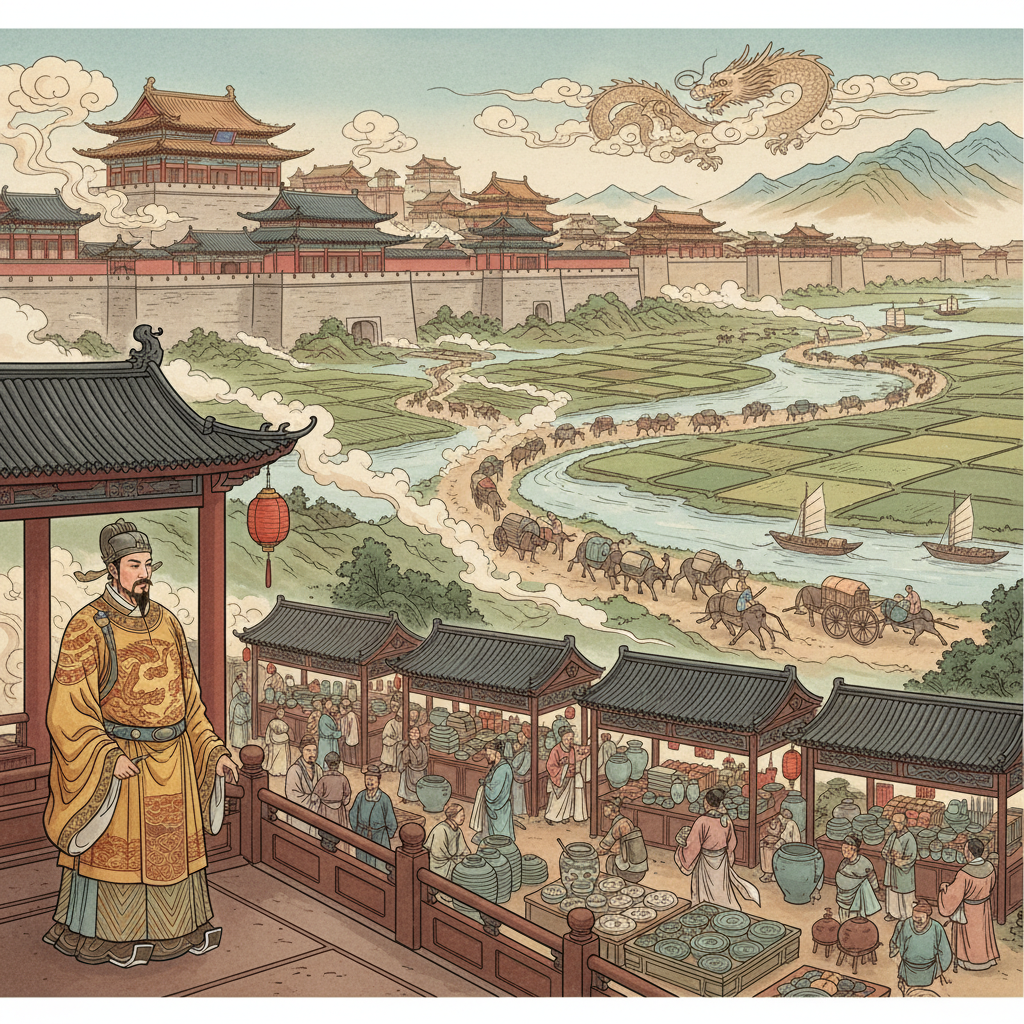
The Historical Foundations of Ancient Chinese Economies
Ancient China is marked by a series of influential dynasties, each possessing unique characteristics that shaped the economic landscape of the nation. Spanning thousands of years, these dynasties, from the Xia to the Qing, laid down the cultural and economic frameworks that would define not only Chinese civilization but also the world. Understanding the economic practices during these periods sheds light on how trade, agriculture, and governance intertwined to support one of the world’s oldest continuous civilizations.
The Role of Agriculture in Sustaining Dynasties
Agriculture was the backbone of ancient Chinese economies. With a predominantly agrarian society, the success of the dynasties was closely tied to agricultural output. The invention of plows and irrigation techniques facilitated the cultivation of rice, wheat, and other staples, allowing populations to thrive. Moreover, land ownership became a symbol of status and power. Feudal systems, especially during the Shang and Zhou dynasties, centered on land distribution, where lords owned vast tracts and peasants worked the fields.
The importance of agriculture extended beyond mere sustenance; it was pivotal in tax collection and trade. Large harvests would populate cities and provide the necessary resources for dynastic armies. During the Han dynasty, this shift towards commercial agriculture was significant, promoting trade via the well-established Silk Road. Markets began to flourish, turning towns into vibrant centers of commerce and culture.
Trade and the Silk Road: A Gateway to Prosperity
The Silk Road represents one of the most significant economic achievements of ancient China, linking various cultures across Asia and Europe through trade routes. Established during the Han dynasty, this remarkable network became a vital artery for economic exchange, facilitating not only the transportation of silk but also other goods like spices, textiles, and ceramics.
Merchants traveled vast distances, and Chinese goods became highly coveted in foreign markets. This trade not only enriched the Chinese economy but also led to significant cultural exchanges. The West was introduced to Chinese inventions such as papermaking and printing, while Chinese society absorbed influences in art, food, and religion from the West. The economic prosperity generated by this extensive trading network enabled dynasties to exert military and political influence, creating a ripple effect throughout Asia.
The Influence of Dynastic Policies on Economic Development
Each dynasty implemented policies that either bolstered or hampered economic development. The Qin dynasty, for instance, standardized weights and measures and created a unified currency, promoting trade efficiency. Their legalist approach emphasized strict adherence to regulations, enabling an orderly market environment that attracted trade.
Conversely, the Sui and Tang dynasties introduced policies that encouraged agriculture by reducing taxes for farmers, which in turn increased food production and trade. The Tang dynasty, in particular, saw flourishing cosmopolitan cities like Chang’an become vibrant economic hubs due to its openness to foreign trade and cultural exchanges.
These policies were essential in maintaining social order and bolstering the economies, emphasizing the relationship between governance, economic health, and social stability.
Cultural Significance of Economic Practices
The economies of ancient dynasties were deeply intertwined with cultural practices. Festivals, religious activities, and daily life revolved around agricultural cycles, culminating in harvest festivals that celebrated economic abundance. The Confucian ideology that permeated Chinese society emphasized the importance of agriculture and the roles of its practitioners. This cultural reverence for agronomy highlighted the status of farmers and underscored the moral obligations of rulers to provide for their subjects.
Artisans and merchants, though lower on the social hierarchy, were nonetheless crucial in economic terms, contributing to the richness of Chinese culture. Their crafts, from silk weaving to pottery, not only served practical purposes but were also coveted artistic expressions that showcased China’s cultural heritage. The legacy of these practices can still be seen in modern Chinese values that continue to celebrate hard work, innovation, and community.
Conclusion: Legacy of Ancient Economic Structures
The economic foundations laid by ancient Chinese dynasties continue to influence contemporary China, where the balance between governance, agriculture, and trade remains critical. Understanding the historical context of these economic practices offers insights into the cultural significance they held and the dynamics they fostered in society. As scholars and enthusiasts explore ancient Chinese history, it becomes evident that the roots of China’s current economic prowess are deeply embedded in its rich dynastic past, marked by resilience and innovation.
In essence, the economic tapestry woven by ancient dynasties reflects a civilization that has continuously evolved while honoring its deeply ingrained traditions and cultural practices.